Why Money Alone Won't Fix Global Health Research
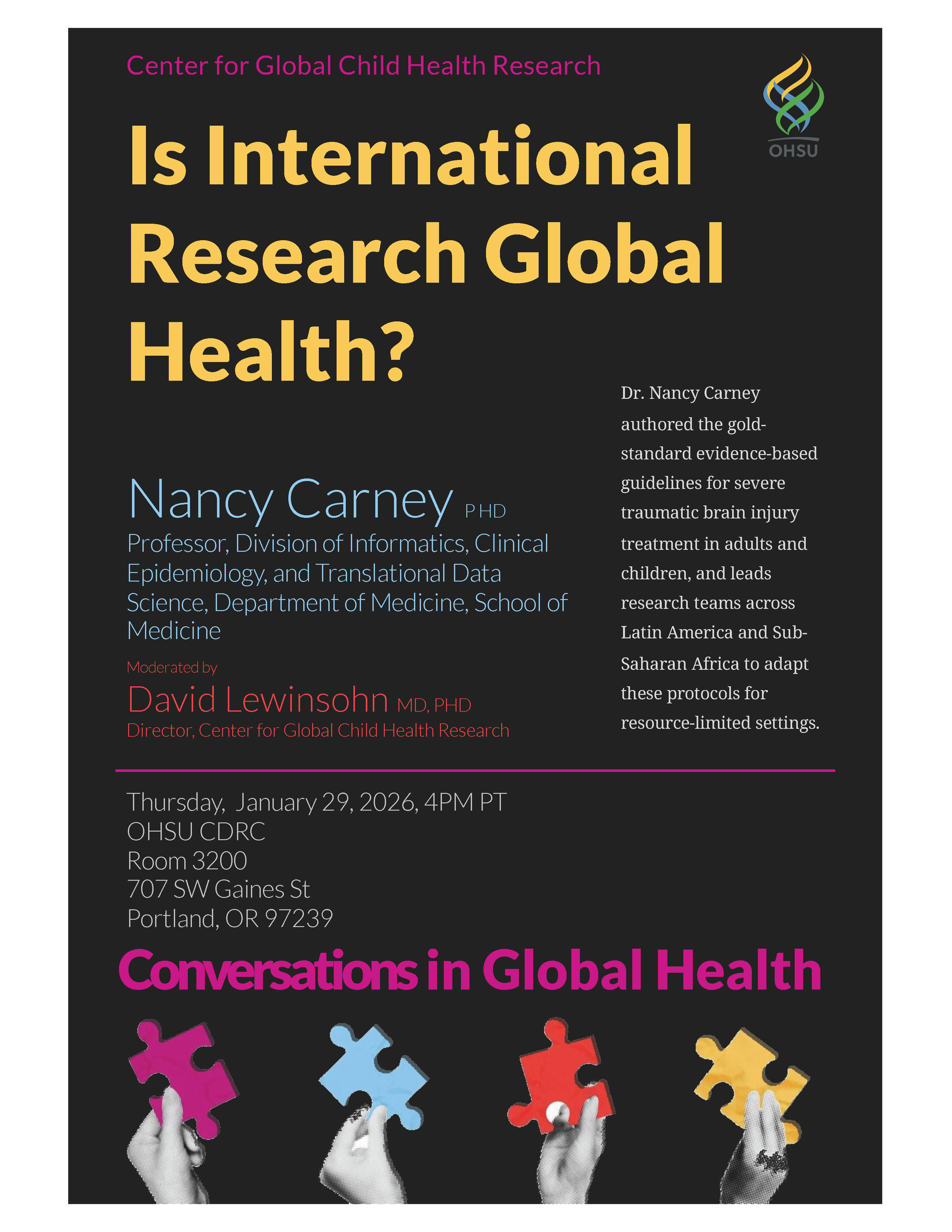
Dr. Nancy Carney (Professor, Division of Informatics, Clinical Epidemiology and Translational Data Science) visits us on January 29 to discuss international research and what actually builds sustainable global health capacity.
Jan. 27. 2026. by Andrew Stout
Dr. Carney has authored gold-standard guidelines for traumatic brain injury treatment in high-income settings. But adapting those guidelines to resource-limited environments? That's where the real questions emerge—about infrastructure, sustainability, and what it takes to create research programs that outlast the funding cycle.
We asked her about these challenges ahead of our event. Here's what she said:
THE CENTER FOR GLOBAL CHILD HEALTH RESEARCH: You've authored evidence-based guidelines for treating severe traumatic brain injury in high-income settings. What's the gap between those guidelines and what's actually feasible in resource-limited environments?
Dr. Nancy Carney: There is no one answer. It depends on the system in which you are working, and there is significant variation across international settings. We are working on finding some fundamental factors that LMICs (low- and middle-income countries) may have in common. What we want to avoid is the easy answer—resources. We have direct experience that focusing on providing resources is insufficient to causing real change and improving patient outcomes.
CENTER: You're working across both pediatric and adult populations in Latin America and Sub-Saharan Africa. How do you build research infrastructure that can serve both—especially when funding and resources are limited?
Dr. Carney: Establishing a working clinical research program is very tedious, and often we lose people and centers when they discover that research is mundane, often boring, and very precise and demanding. But, if a center passes through the eye of the needle, it is usually accompanied by an epiphany that the structure they created can then be used for many different topics and patient populations.
CENTER: When you're designing a study in an LMIC, how do you know whether your work will create something that actually lasts beyond the grant period?
Dr. Carney: You need to engage the LMIC personnel in the work of writing the grant. They need to learn the art of Specific Aims and a solid research approach that will pass the review committee. Then they need to engage in all of the administrative work, reporting, and financial decisions involved in grant management. There's no guarantee.
Is International Research Global Health?
Nancy Carney, PhD Professor, Division of Informatics, Clinical Epidemiology and Translational Data Science, Department of Medicine, School of Medicine
Thursday, January 29, 2026 | 4:00 PM PT
OHSU CDRC, Room 3200 707 SW Gaines St, Portland, OR 97239
Moderated by: David Lewinsohn, MD, PHD | Director, Center for Global Child Health Research
COMING UP
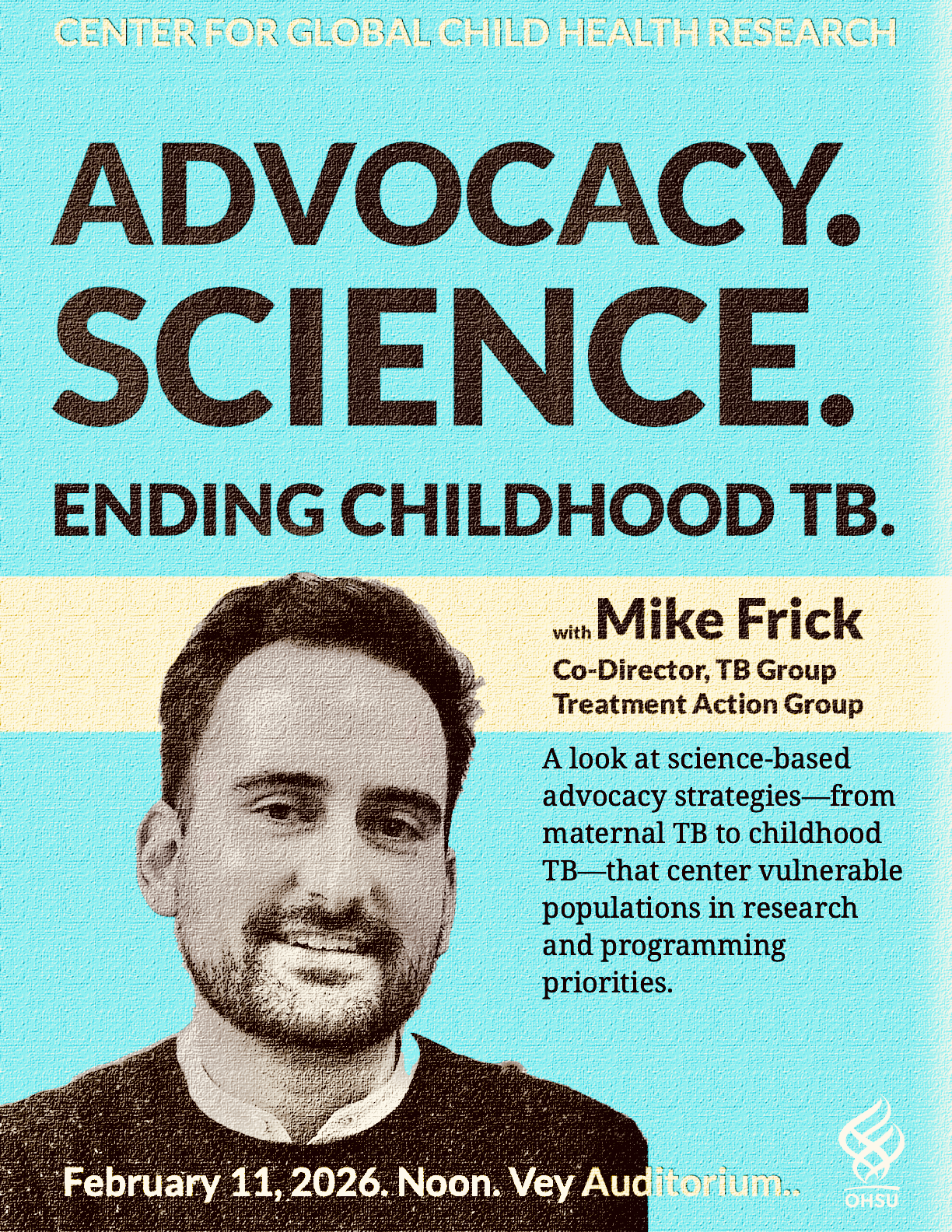
Mike Frick on Advocacy & Ending Childhood TB
This conversation with Nancy is just the beginning. On February 11, we continue exploring how individual expertise becomes systemic change when Treatment Action Group's Mike Frick discusses advocacy, science, and centering vulnerable populations in TB research. Two conversations. One theme. Don't miss it.
Wednesday, February 11, Noon | Vey Auditorium
All are welcome. Questions? Contact stouan@ohsu.edu